

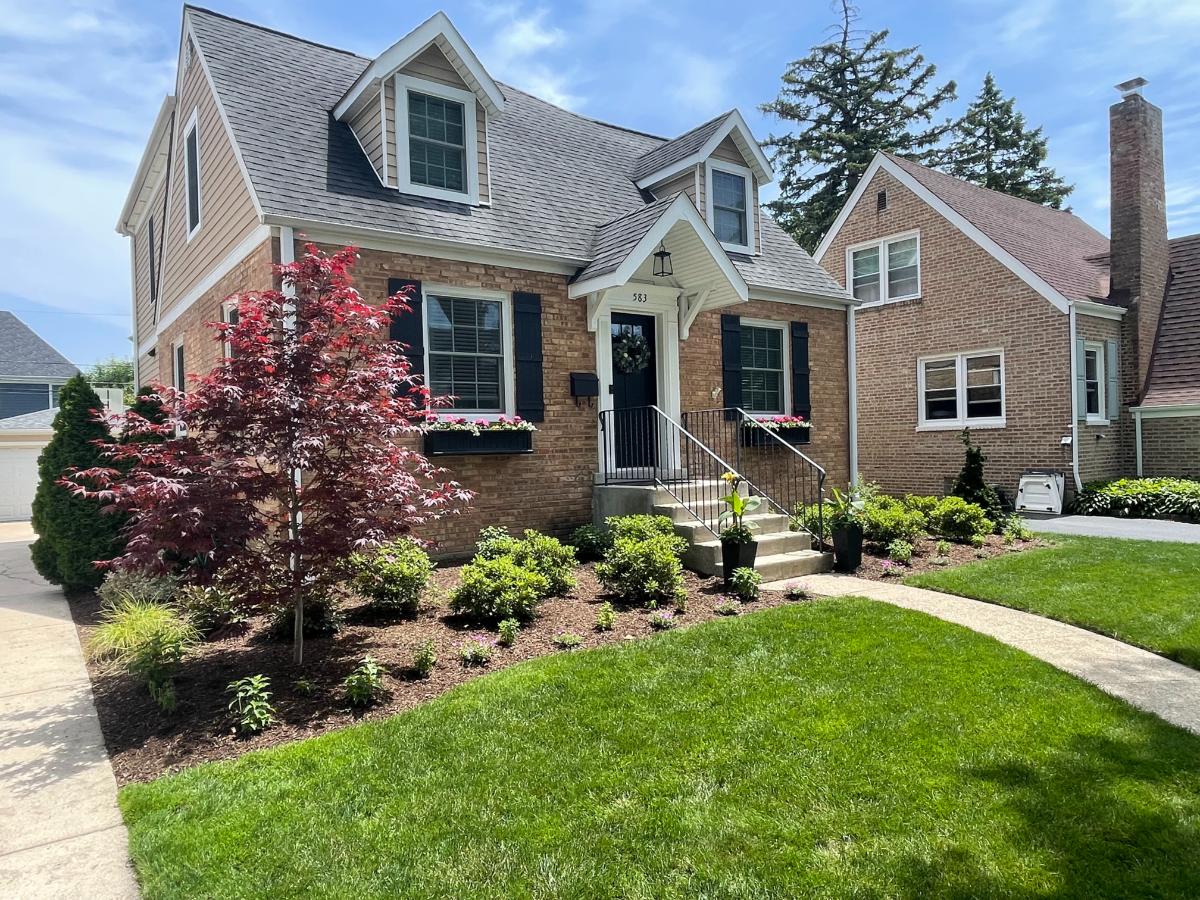
A Backyard Patio & Elmhurst Home Landscape Transformation
A Home With Good Bones — and Landscaping That Wasn't Keeping Up
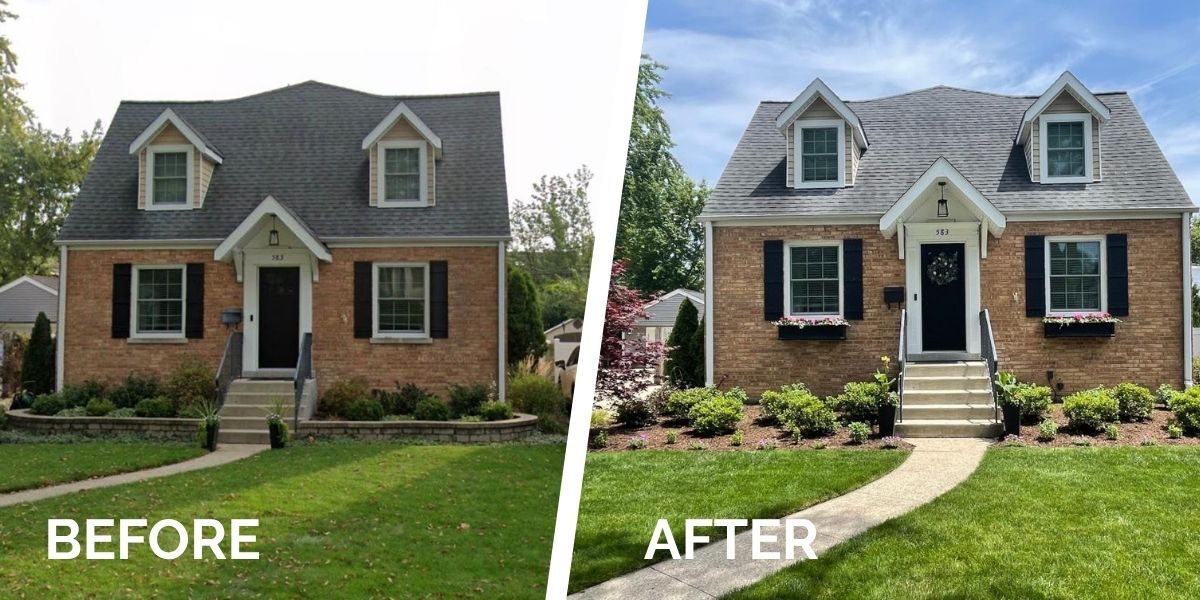
This classic brick Cape Cod in Elmhurst, Illinois had everything going for it architecturally — charming curb appeal, beautiful shutters, a welcoming front entry, and a backyard with real potential. But the landscaping told a different story. Out front, dated plantings and retaining walls that sat too high around the house made the property feel heavy and closed-in. The walls themselves were stained and aging, and the overall look no longer suited the home. Out back, an old brick patio had been slowly sinking and was well overdue for replacement.
The homeowner came to Ross & Jack's Landscaping with a clear set of goals: modernize the front yard, lose the retaining walls, keep the beloved Japanese maple, and transform the backyard into a functional outdoor living space that actually connected the different areas of the property. Oh — and make it all feel cohesive from front to back.
What followed is one of the most satisfying complete-property transformations the team has delivered.
Front Yard: Out With the Old, In With Something Better
Removing the Retaining Walls and Starting Fresh
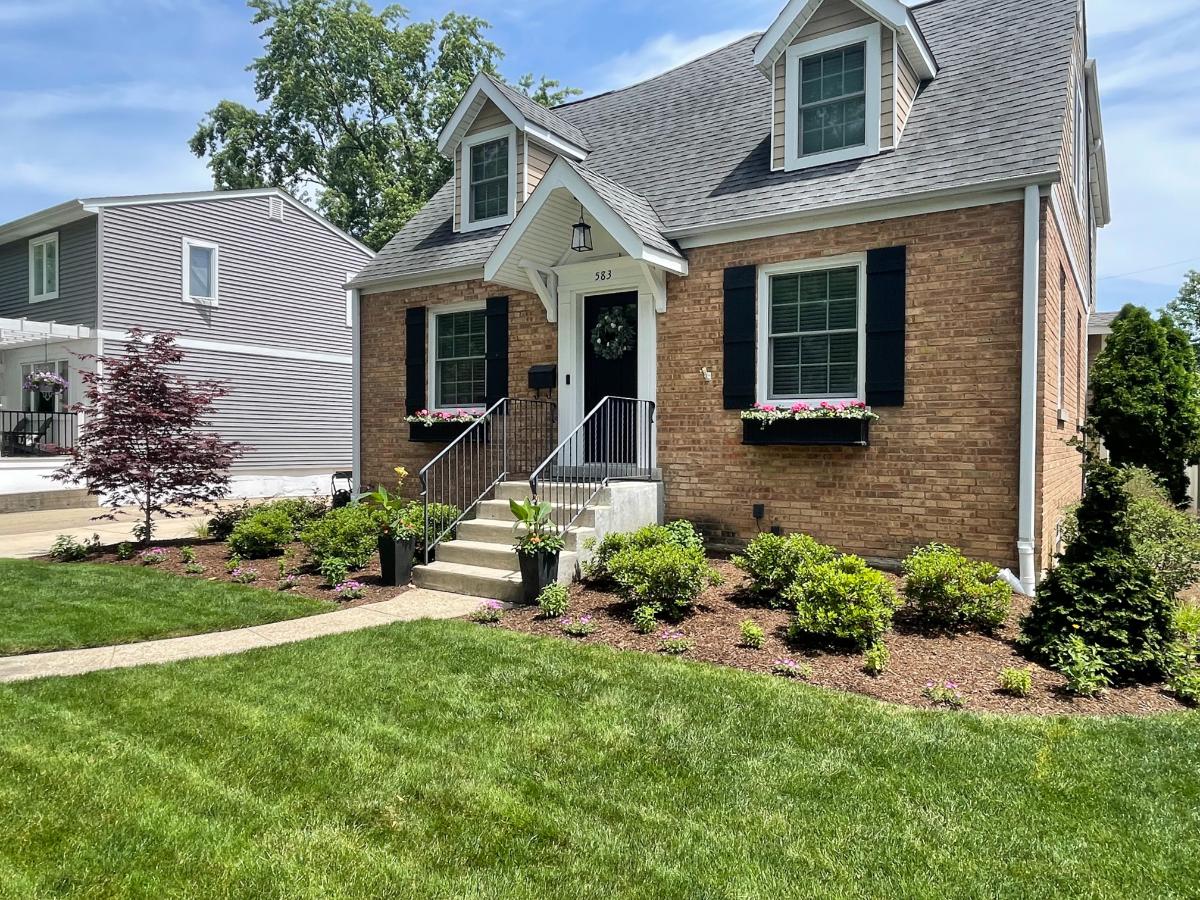
The retaining walls had to go. They were too tall, visually heavy, and dated — and removing them allowed the team to redesign the front beds on a single, clean level that looks far more modern and intentional. The result is a landscape that feels open, refined, and right for the home.
Working with a trusted Elmhurst landscape company meant the homeowner didn't have to figure out what came next on her own. Ross & Jack's came in with a plan that honored what was already special about the property and built from there.
Saving the Japanese Maple
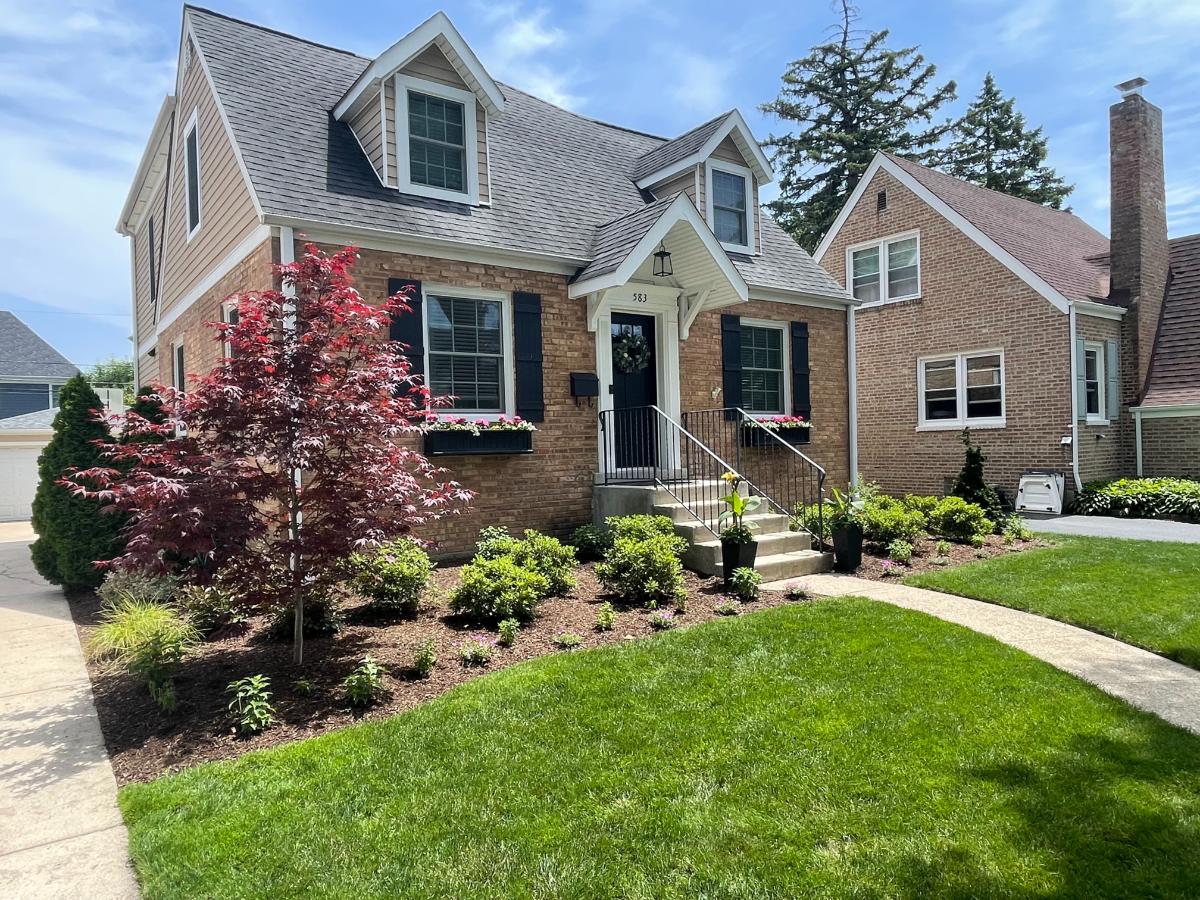
The Japanese maple was non-negotiable, and rightfully so. A mature specimen like this is one of the most distinctive features a front yard can have — its deep burgundy foliage and graceful structure give the property a natural focal point that no new planting could replicate overnight. Ross & Jack's designed the new beds around the tree, letting it anchor the left side of the yard while fresh, symmetrical plantings framed the front entry on both sides.
The new plant beds are clean and contemporary — neatly enclosed around the front steps and filled with a layered mix of shrubs and groundcover that will fill in beautifully over time. Fresh mulch completes the look, giving everything a polished, finished feel that's a complete departure from what was there before.
Wrapping the Design Around the Property
One of the decisions that elevates this project from a simple refresh to a true landscape transformation is how the design extends beyond the front yard. Rather than stopping at the corners of the home, the landscaping wraps continuously along the driveway side of the house and along the fence on the opposite side. This creates a sense of continuity — the property feels designed as a whole rather than patched together — and it softens the transition from front yard to backyard in a way that feels natural and intentional.
Backyard: A Paver Patio That Works as Hard as It Looks
Replacing an Aging Brick Patio
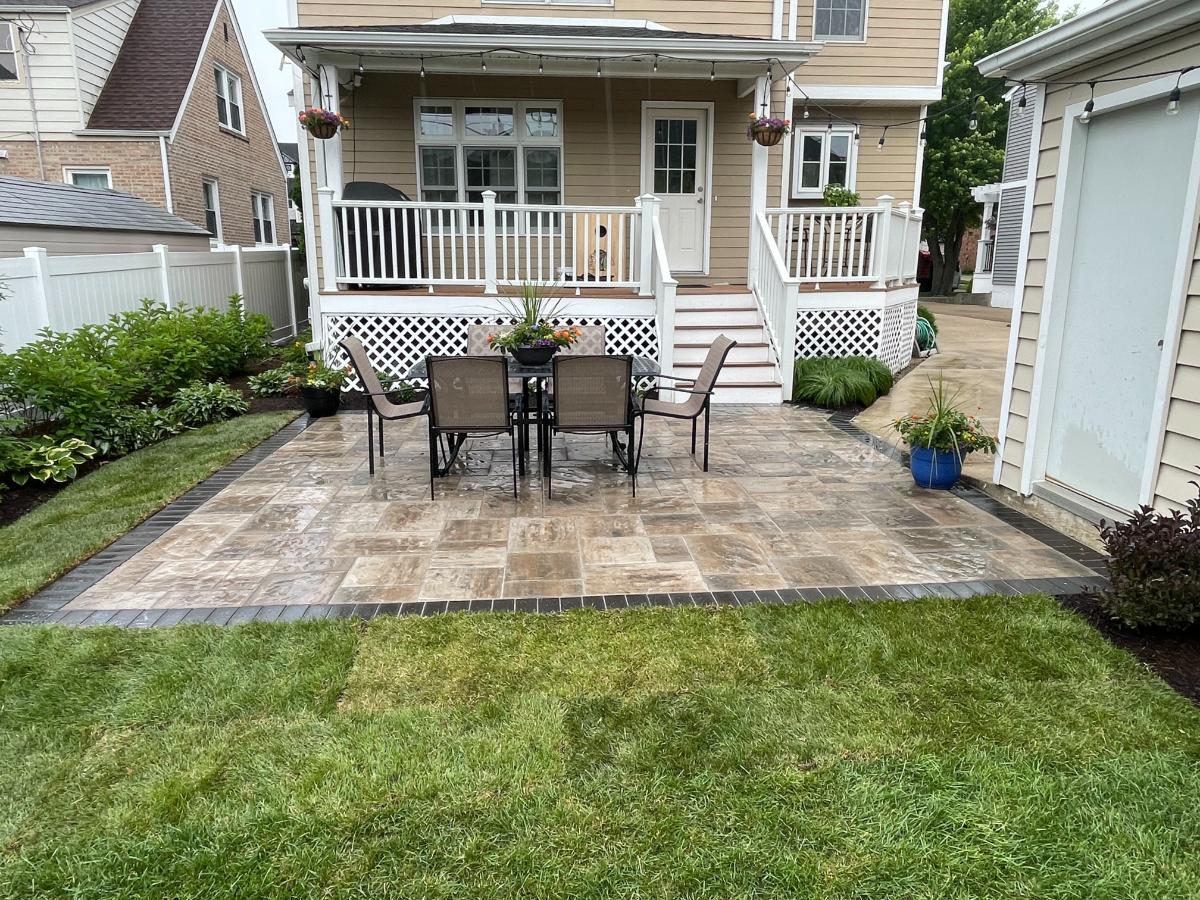
The old backyard patio was sinking, deteriorating, and simply not functional anymore. Ross & Jack's ripped it out and replaced it with a stunning hand-laid permeable paver patio in a slate concrete paver — large-format tiles in warm, variegated tones with a contrasting dark border that frames the space beautifully.
As an experienced Elmhurst paver patio builder, the team brings a design philosophy to hardscaping that goes beyond aesthetics. Designer Mike Spatola puts it plainly: during the design process, they're "always trying to cross off more X's — how can we make life easier for the client?" That thinking is evident in how this patio was laid out.
Designed for How People Actually Live
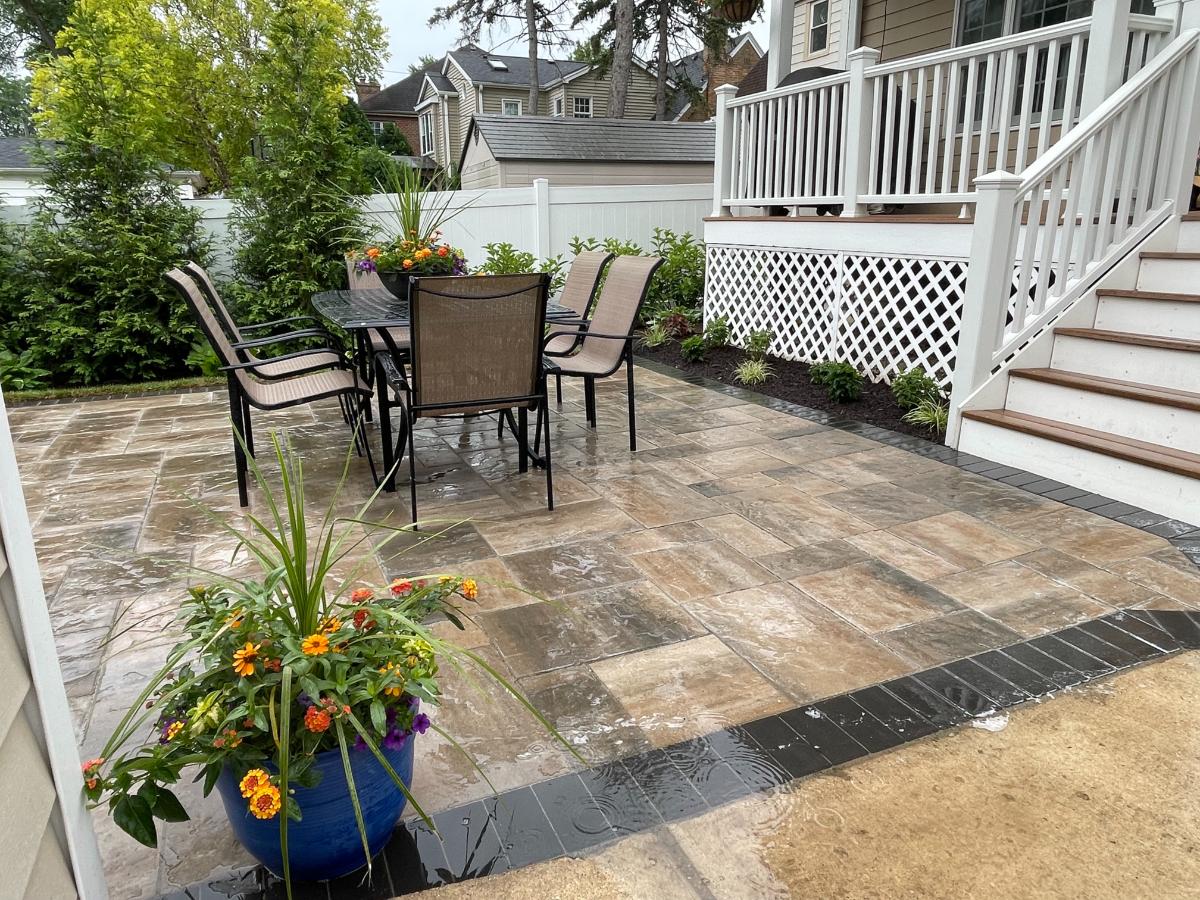
The patio wasn't just sized for a table and chairs and called a day. It was positioned and designed to connect three distinct points of access — the back deck, the garage door, and the driveway — so that moving between spaces feels easy and natural. That kind of functional thinking is what separates a well-designed outdoor space from one that simply looks good in photos.
The deck above and the patio below now work together as a layered outdoor living area, with the patio serving as the main gathering space and the deck offering an elevated vantage point. String lights overhead and hanging flower baskets add warmth and personality that make the space feel genuinely lived-in.
Backyard Landscaping That Creates a Sense of Place
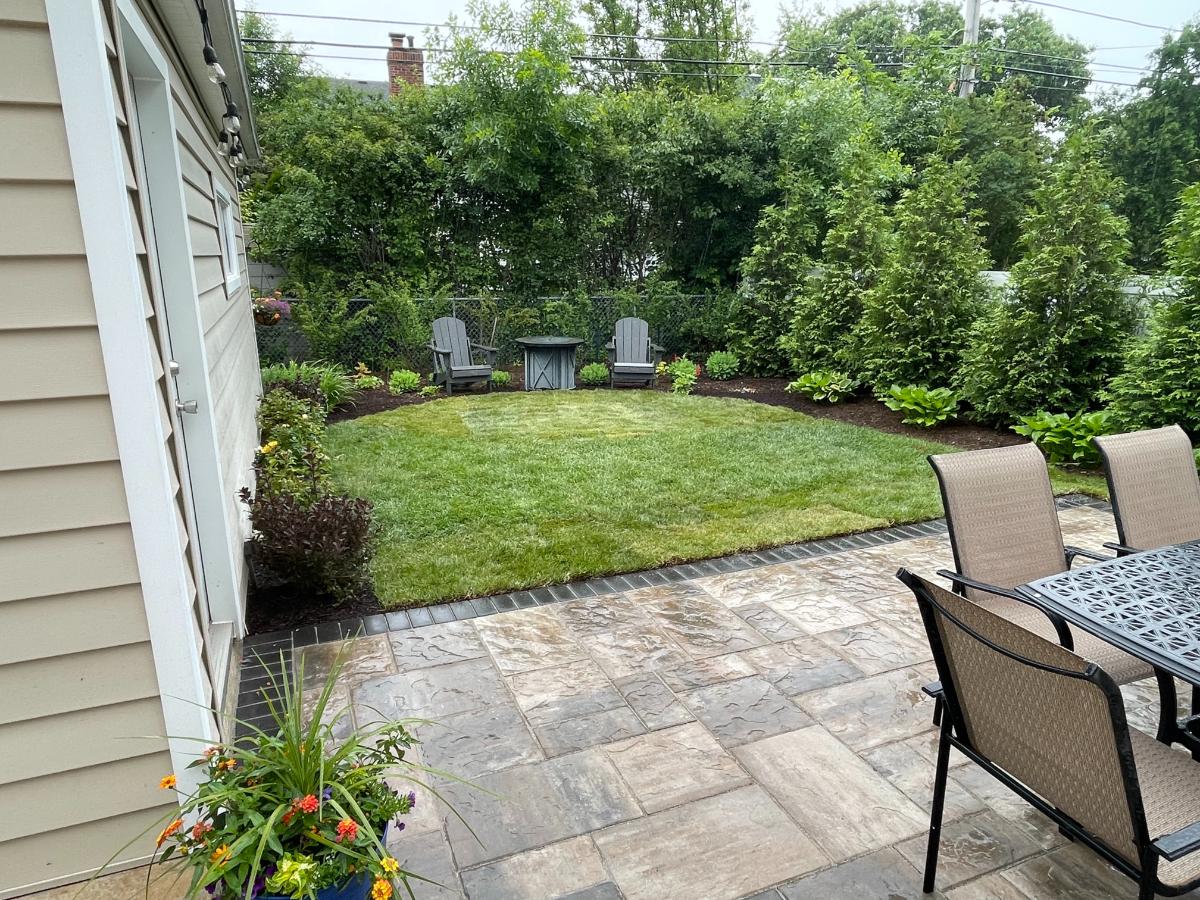
Ross & Jack's didn't stop at the patio. The backyard landscaping was fully installed as part of the project, including privacy trees along the perimeter and a charming half-circle of lined planting beds that wraps the patio in greenery and gives the space a cozy, enclosed feeling. In a smaller backyard, that kind of thoughtful planting design makes all the difference — it creates intimacy without feeling cramped, and it gives the space a character it simply didn't have before.
The Bigger Picture
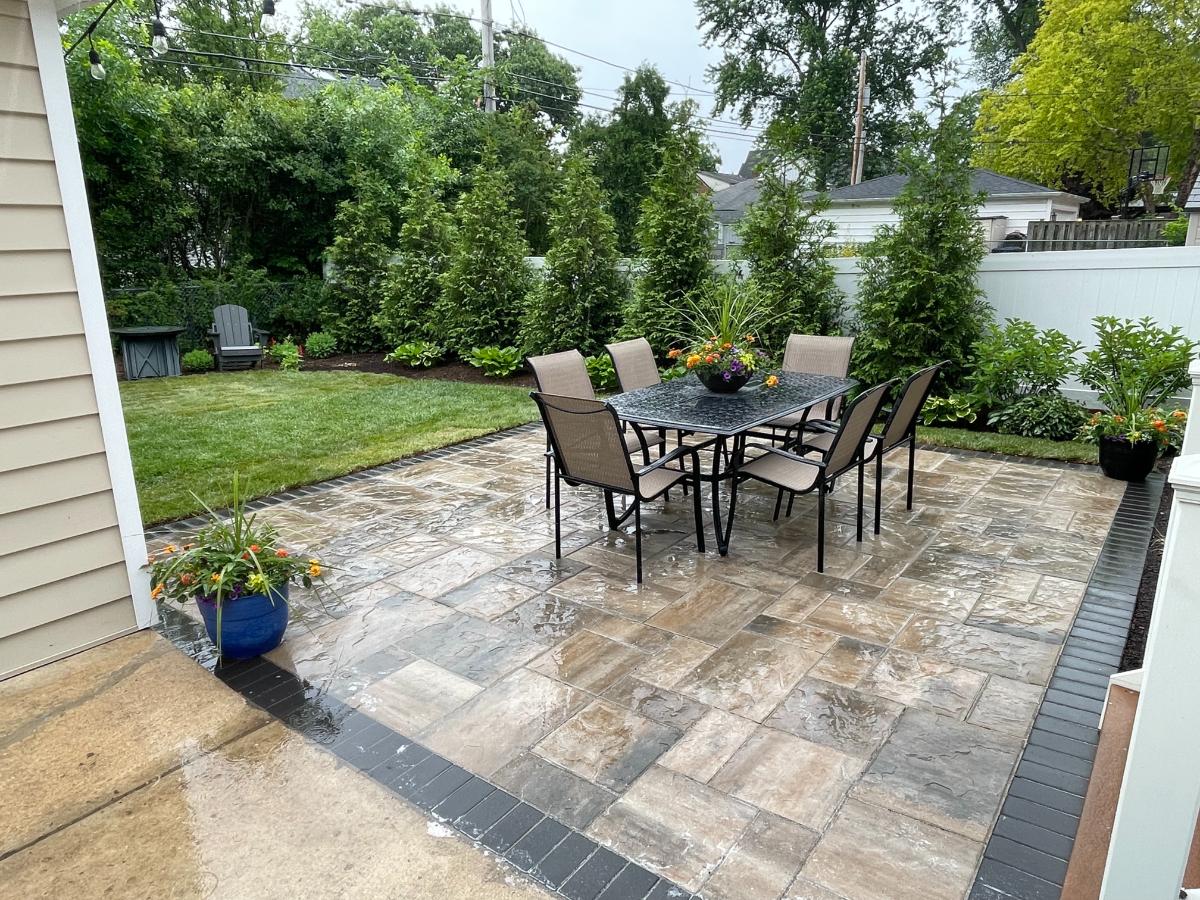
This project is a perfect example of what great landscape design can accomplish on a modest-sized property. The scope wasn't massive. The yard isn't enormous. But the impact is significant — because every decision, from removing the retaining walls to connecting the patio to three access points to wrapping the landscaping around the full perimeter, was made with intention.
When a project is designed to work as a complete system rather than a collection of individual improvements, the result feels cohesive, considered, and genuinely elevated. That's exactly what this Elmhurst home now has.
Ready to Transform Your Own Property?
Whether you're starting with a tired front yard, a failing backyard patio, or both, Ross & Jack's Landscaping brings the same thoughtful, function-first design approach to every project. Reach out today to talk through your goals and get the conversation started.
Frequently Asked Questions
How much does it cost to redo both front and backyard landscaping in Elmhurst, IL?
Total costs depend heavily on the scope of work — removing existing features like retaining walls or old patios, installing hardscaping, plant selection, and the overall size of the property all factor in. A combined front and back project like this one involves multiple trades and design considerations, so the best starting point is a consultation with a local landscaping professional who can assess your property and provide an accurate estimate.
Is it worth removing old retaining walls when redoing landscaping?
In many cases, yes — especially when the walls are dated, stained, structurally compromised, or simply no longer suit the style of the home. Removing them can open up the design possibilities significantly and allow for a cleaner, more modern landscape layout at a single level. A landscape designer can help you evaluate whether removal, repair, or replacement makes the most sense for your specific situation.
Can a Japanese maple be preserved during a major landscaping renovation?
Absolutely, and it's often worth the effort. Mature Japanese maples are slow-growing, distinctive, and genuinely difficult to replicate with new plantings. A good landscape designer will work the existing tree into the new layout rather than around it, making it a featured element of the design as Ross & Jack's did in this project.
What is a permeable paver patio and why would I want one?
Permeable pavers are designed to allow water to pass through the joints and into the ground below, which reduces runoff, minimizes puddles, and is generally better for the surrounding landscape. They're a smart choice for homeowners who want a beautiful patio surface that also handles drainage well — particularly relevant in areas that see significant rainfall throughout the year.
How do I connect a paver patio to a deck?
The two elements need to work together both aesthetically and functionally — in terms of elevation, access points, and visual flow. This is exactly the kind of design problem that landscape and hardscape professionals solve during the planning phase. In this Elmhurst project, the patio was designed to transition seamlessly from the deck stairs to the driveway and garage door, creating a connected system that makes the backyard far more practical to navigate.
What are privacy trees, and where should they be planted in a backyard?
Privacy trees are fast-growing evergreens — arborvitae and similar species are commonly used — that form a visual screen along property lines or fence lines. Placement depends on the orientation of the yard, neighboring structures, and the look you're going for. A landscape professional can recommend species and spacing that work for your specific yard and local climate.
How long does a complete front and backyard landscaping project take?
Timeline depends on the size and complexity of the project. A full-property renovation involving hardscape removal and installation, plant bed design, tree planting, and landscaping can range from one to several weeks. Your landscaping contractor will provide a project timeline during the proposal phase.
What landscaping styles work best with a brick home?
Brick homes pair well with a range of styles, but they tend to look especially sharp with structured, symmetrical planting beds, layered greenery, and warm-toned hardscape materials. Japanese maples, boxwoods, ornamental grasses, and flowering perennials are all popular choices. The key is selecting plants and hardscape colors that complement the brick tone rather than compete with it.
How do I make a small backyard feel bigger with landscaping?
Thoughtful design can do a lot for a smaller space. Using curved or shaped plant beds instead of straight lines, adding layered plantings of varying heights, incorporating privacy trees to define the perimeter, and choosing a patio size and shape that's proportional to the yard all contribute to a space that feels intentional and expansive rather than cramped. This Elmhurst backyard is a great example of how much impact good design can have on a modest-sized outdoor space.
What is the difference between a paver patio and a concrete patio?
Paver patios are made from individual units — concrete, brick, or natural stone — that are hand-laid and can be replaced individually if damaged. Concrete patios are poured as a single slab, which can crack over time and is more difficult and costly to repair. Pavers generally offer more design flexibility, better drainage options (especially with permeable styles), and a higher-end aesthetic. They also tend to hold up better in freeze-thaw climates like Chicago's.
How do I find a landscaper in Elmhurst who does both landscaping and hardscaping?
Look for a company that offers both services under one roof and has a portfolio that demonstrates cohesive design across planting and hardscape projects. Reading reviews, asking for project photos, and scheduling a consultation to see how the team approaches design are all good ways to evaluate fit. A contractor who can design and build the full project — plants, beds, and pavers — is typically better positioned to deliver a result that feels unified.